 AliviaQ
Online psychologist: how remote therapy works and when to choose it
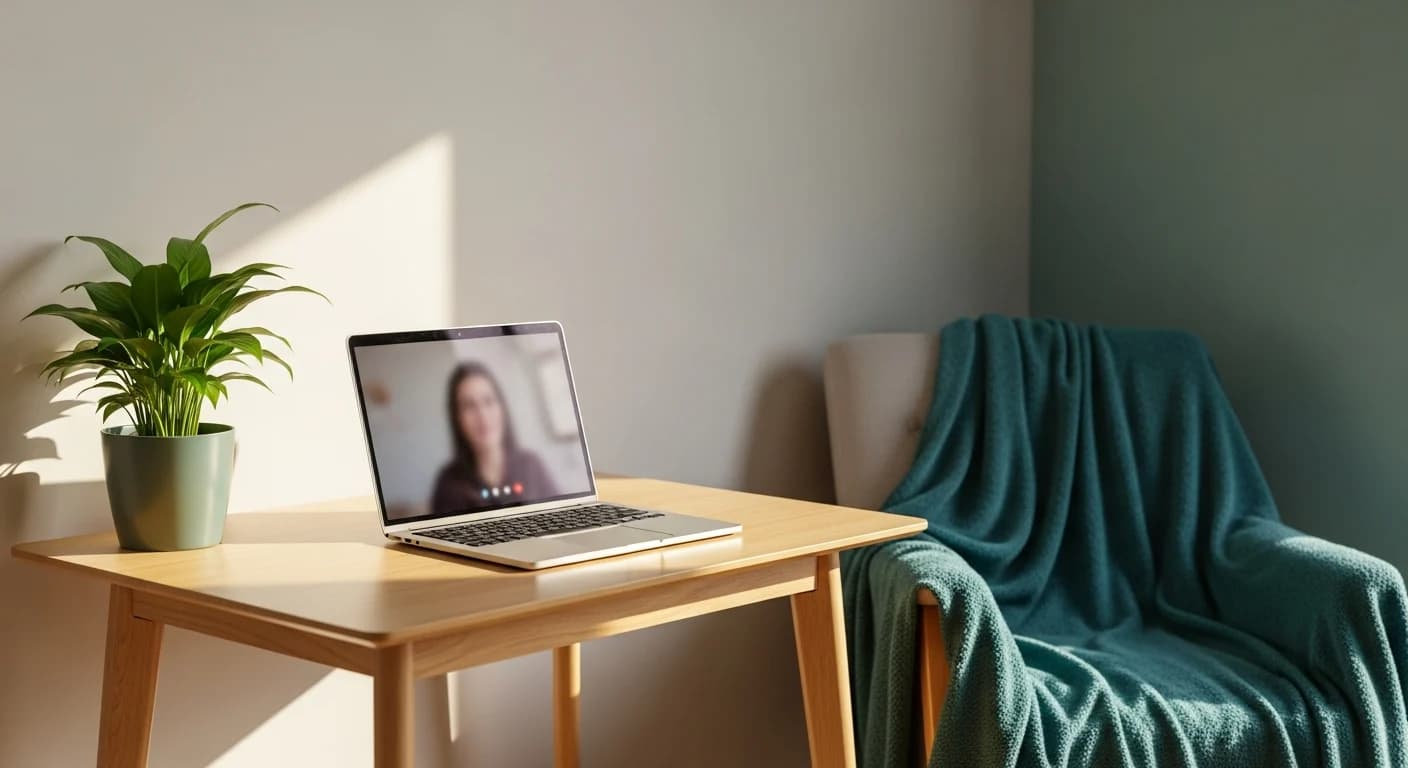
How online psychological therapy works, what problems it treats, how it differs from psychiatry and when remote care is not enough.
An online psychologist is a licensed mental health professional who works by video call, bound by exactly the same ethical and confidentiality obligations as in a face-to-face office. For anxiety, mild to moderate depression, stress, grief or relationship problems, the available evidence consistently shows that online psychological therapy achieves results comparable to in-person therapy. What changes is the channel, not the method.
How online psychological therapy works
The process resembles traditional care more closely than most people expect.
- First assessment session. The psychologist spends 45 to 60 minutes understanding what is happening, since when, how it affects your daily life and what you have already tried. That produces a working hypothesis and a proposed plan.
- Setting goals. Good therapy is not just "talking". You agree on concrete targets: sleeping through the night, leaving the house again, stopping procrastination, reducing arguments.
- Working sessions. Usually weekly or every two weeks, 45 to 60 minutes. Between sessions there is often homework: thought records, graded exposure, breathing exercises or sleep hygiene practice.
- Review and discharge. Progress is reviewed every few sessions. Many anxiety or mild depression cases resolve within 8 to 20 sessions.
All you need is a device with a camera, a stable connection and a place where you can talk without being overheard.
What an online psychologist treats well
- Anxiety in all its forms: panic attacks, generalised anxiety, social phobia, excessive health worry.
- Mild and moderate depression, apathy, loss of interest, persistent low mood.
- Work stress and burnout, overload, inability to switch off.
- Grief after a death, a breakup or migration.
- Couple and family problems, including cases where each member joins from a different country.
- Insomnia of behavioural origin.
- Self-esteem, procrastination and habits: emotional eating, problematic social media use.
- Support in chronic illness: diabetes, persistent pain, cancer in remission.
Cognitive behavioural therapy, the approach with the strongest evidence base for anxiety and depression, adapts particularly well to the online format because it relies on records, exercises and homework that can be shared on screen.
Psychologist or psychiatrist: which one do you need?
This is the most common question, and the answer is straightforward. A psychologist is not a physician and does not prescribe medication: they work with behaviour, thoughts and emotions through psychotherapeutic techniques. A psychiatrist is a medical specialist who diagnoses mental disorders and can prescribe and adjust drugs.
A practical rule: if your distress is recent, has an identifiable trigger and you can still manage daily life, start with a psychologist. If you have been unable to function for months, have not slept for weeks, have lost significant weight, have thoughts of death or already take psychiatric medication, you also need a psychiatric assessment. In moderate and severe depression, combining psychotherapy with medication usually works better than either alone.
When online therapy is not enough
Remote care has clear limits, and a good professional will tell you so in the first session:
- Active suicidal risk with a plan or intent.
- Acute psychosis, mania or loss of contact with reality.
- Eating disorders with medical complications, which require weight monitoring and blood tests.
- Addictions needing supervised detoxification.
- Domestic violence, when there is no safe space to speak.
- Young children, who usually need in-person observation and family work.
Signs you need urgent help today, not at the next session: thoughts of harming yourself, concrete suicide plans, hearing voices, several days without sleep with euphoria and agitation, or feeling you have lost contact with reality. In those cases go to an emergency department or contact a crisis line.
Venezuela and Latin America context
Here online therapy stops being a convenience and becomes, for many people, the only door still open.
The WHO estimates that 1 in 8 people worldwide lives with a mental disorder and that depression affects around 280 million people. The gap is not in diagnosis but in treatment: PAHO has warned that in Latin America and the Caribbean most people living with depression receive no care, with treatment gaps above 70% in several countries of the region. On top of that, health systems devote on average around 2% of their health budget to mental health.
In Venezuela that void is deepened by the deterioration of the public network, intermittent shortages of psychiatric medication and the departure of professionals. And there is a specific factor: migration. According to the R4V platform, more than 7.9 million Venezuelans live outside the country. Online care lets someone in Santiago, Bogotá or Buenos Aires stay in therapy with a psychologist who understands their context and what it means to leave a home behind, and lets a mother in Maracaibo join the same family session as her migrant son.
Does it work as well as in-person therapy?
For most reasons for consultation, yes. Reviews of cognitive behavioural therapy delivered by video call consistently show reductions in anxiety and depression symptoms equivalent to the in-person format, with similar or better satisfaction and adherence, partly because travel disappears.
The practical advantages matter: fewer dropouts due to lack of time, access from areas with no psychologists, and a lower stigma barrier. For many people it is easier to book that first appointment from a phone than to walk into a waiting room where they might meet someone they know.
The real cost of not starting is usually higher than the cost of one session. With Aliviaq you can talk to a health professional from wherever you are, with no waiting list and without leaving home.
Frequently Asked Questions
Can an online psychologist prescribe medication?
No. Psychologists are not physicians and do not prescribe drugs. If your case requires it, they will refer you to a psychiatrist, who can prescribe and adjust treatment.
How many online therapy sessions do I need?
It depends on the reason, but many anxiety or mild depression cases improve clearly within 8 to 20 sessions. Well-planned therapy sets goals from the start and reviews progress regularly.
Is a video call therapy session confidential?
Yes. Professional confidentiality is the same as in an office. Use platforms with encrypted connections and choose a place where nobody else can hear you; headphones help a lot.
Is online therapy useful if I live outside my country?
Yes, and it is one of its most valuable uses. You can continue in your own language with a professional who knows your cultural context, which is especially helpful in migration grief and adaptation.
What do I need for the first session?
A device with a camera, a good connection, a private space and a few minutes beforehand to note what is happening, since when and what you hope to achieve. If you take any medication, keep the list handy.
Medicina General with extensive experience in telemedicine. Regular contributor to the AliviaQ health blog, committed to rigorous and accessible medical communication.