 AliviaQ
Online physiotherapy and orthopedics consultation: what it covers
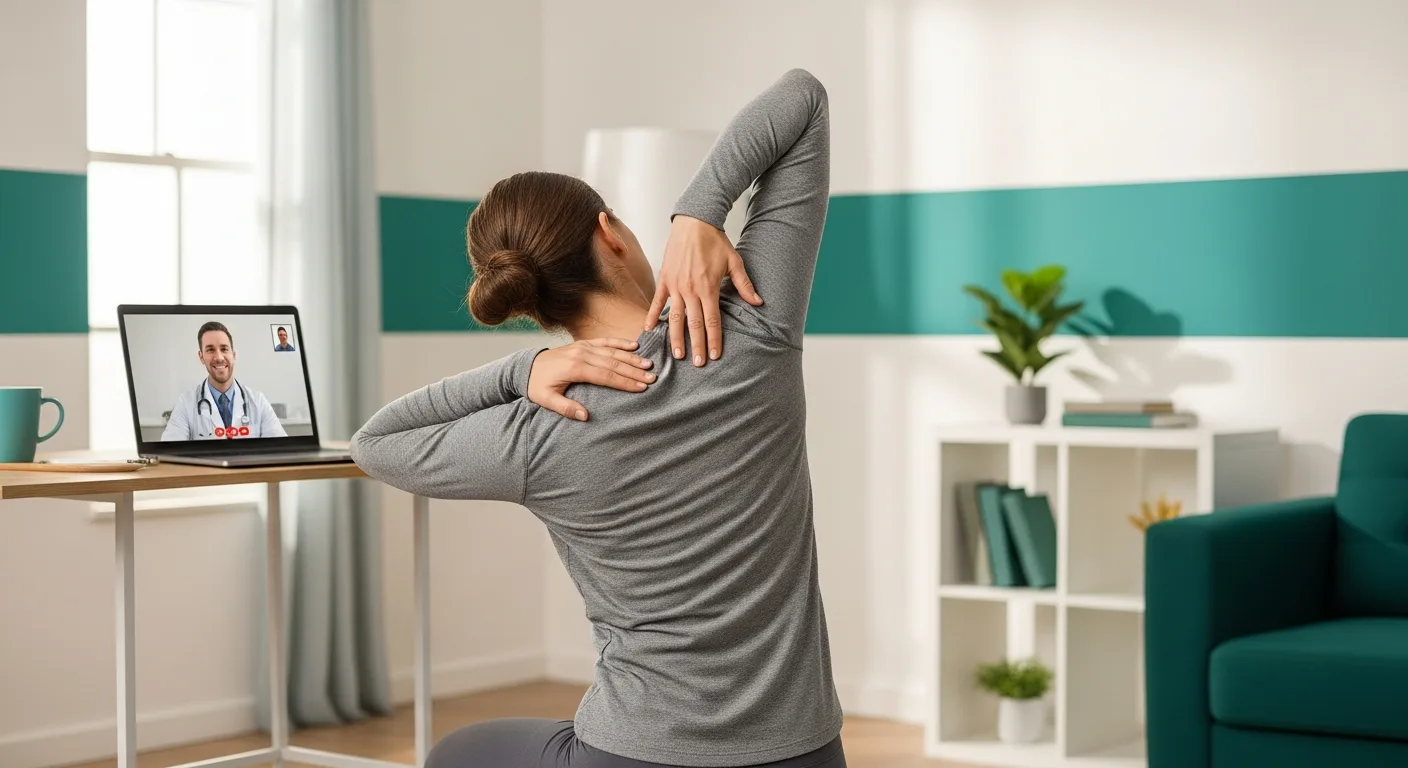
What an orthopedist or physiotherapist can assess by video, which problems still need an in-person visit, and how to prepare.
Back pain, knee pain and exercise injuries are among the most common reasons people look for a doctor anywhere in the world. An online physiotherapy or orthopedics consultation solves more than most people expect: the clinician listens to how the pain started, watches how you move on camera, rules out red flags and hands you a concrete plan of exercises and self-care. What it cannot do is palpate you, inject you or operate on you. This guide draws that line precisely.
What an online physiotherapy or orthopedics consultation covers
Most musculoskeletal pain is not diagnosed by a machine — it is diagnosed by asking the right questions and watching you move. These are the situations a remote visit handles well:
- Mechanical low back and neck pain. Muscle strain, posture- or load-related pain, stiff neck, discomfort that shows up after an effort. This is the number-one reason for consulting and the one that translates best to video.
- Tendon problems. Painful shoulder, tennis elbow, Achilles tendinopathy, plantar fasciitis. A focused history plus guided movement tests point well to the diagnosis.
- Mild sports injuries. Overload, runner's knee, pain that appears after ramping up training.
- Rehabilitation, post-operative or post-fracture follow-up. Reviewing technique, range of motion, pain and progress, and adjusting the load between in-person sessions.
- Reading your imaging. If you already have an X-ray, an MRI or a report, an orthopedist can explain what it means for your case.
- Chronic pain education. Understanding why it hurts and how to move again is itself an evidence-backed treatment.
The scale of this is enormous. According to the World Health Organization, around 1.71 billion people live with a musculoskeletal condition, and low back pain is the single leading cause of disability worldwide — affecting some 619 million people in 2020 and projected to reach 843 million by 2050.
What cannot be solved remotely
Being honest about the limits is part of a good online consultation:
- Acute trauma with suspected fracture or dislocation. A hard fall, visible deformity or an inability to bear weight needs an X-ray and an in-person assessment.
- Anything that needs hands. Manual therapy, dry needling, injections, functional taping and the finer ligament instability tests have no video equivalent.
- Imaging and procedures. The doctor can order them, but the X-ray, MRI or surgery happens off screen.
- A suspected serious cause. If the history points to infection, tumor or nerve compression, the route is in-person and fast.
Red flags: seek in-person care today
- Progressive loss of strength in a leg or arm, or new difficulty walking.
- Trouble passing urine or controlling your bowels, or numbness around the genitals and inner thighs together with back pain. This is a genuine emergency.
- Back pain with fever, chills or a recent infection.
- Pain that does not ease with rest, worsens at night, or comes with weight loss or a history of cancer.
- A swollen, warm, painful calf, especially after immobilization or a long trip.
How the consultation works, step by step
- You book a video visit and describe your reason when scheduling.
- Focused history: when it started, what triggered it, what makes it better or worse, how it interferes with work and sleep.
- Video-guided examination: the clinician asks for specific movements — raising your arm, bending forward, standing on one leg, sitting and rising from a chair — and observes range, movement quality and where the pain appears.
- Assessment and plan: likely diagnosis, an exercise prescription with sets and frequency, pain management, and which activities to keep or avoid.
- Referral and follow-up: if imaging, in-person physiotherapy or surgery is needed, you leave knowing where to go and how urgently.
How to prepare and get the most out of it
- Wear clothing that lets the affected area be seen, and clear about two meters of space.
- Prop your phone at hip height so your whole body is in frame.
- Have previous reports or imaging at hand, your medication list and a sturdy chair.
- Note how long it has hurt, what worsens it, what relieves it, and rate the intensity from 0 to 10.
Does telerehabilitation work as well as in-person care?
For many conditions, yes. Comparative studies published in recent years consistently show that remote rehabilitation programs achieve pain and function improvements similar to in-person care in low back pain, knee osteoarthritis and recovery after knee replacement, provided the program is well designed. The channel is not what matters — doing the exercises is. A short, frequent online check-in often produces better consistency than an in-person session every three weeks.
The WHO also estimates that 2.4 billion people live with a condition that would benefit from rehabilitation — a need that available services fall well short of covering in many countries.
Venezuela and the LATAM context
In Venezuela and much of Latin America, orthopedics and physiotherapy are concentrated in the largest cities. For someone living inland, a consultation means travel, a day off work and a cost that often exceeds the visit itself. And there is a cruel irony: traveling on public transport with low back pain is exactly what hurts most.
The pressure on the system compounds it. The WHO projects a shortfall of around 10 million health workers by 2030, concentrated in low- and middle-income countries. An online consultation replaces neither the operating room nor the X-ray suite, but it solves the first step: knowing whether your problem needs a hospital or can be managed with a solid home exercise plan. For the Venezuelan diaspora it also means continuing treatment with a doctor who speaks your language.
The bottom line
If your pain is mechanical, has lasted days or weeks, followed no major impact and comes with no red flags, an online physiotherapy or orthopedics consultation is an excellent first step: it saves you a trip, gives you a working diagnosis and gets you doing the one thing that actually changes the outcome — moving well. And if a red flag is there, the online visit still earns its place: it tells you to go in person today. At Aliviaq you can talk to a real doctor by video and leave with a clear plan.
Frequently Asked Questions
Can an orthopedist diagnose over a video call?
Yes, for most musculoskeletal pain. The diagnosis rests mainly on the clinical history and on watching how you move — both of which work well on video. When palpation or imaging is needed, the doctor will tell you.
Can they prescribe exercises without seeing me in person?
Yes, and that is the core of the visit. The clinician teaches each exercise, watches you perform it and corrects your technique in real time — which is precisely what prevents you from doing the program wrong at home.
Is it safe to treat back pain without a physical examination?
For mechanical low back pain without red flags, clinical guidelines do not recommend imaging up front. What matters is ruling those red flags out, and that is done with a well-directed history.
Medicina General with extensive experience in telemedicine. Regular contributor to the AliviaQ health blog, committed to rigorous and accessible medical communication.