 AliviaQ
How Much Do Telemedicine Doctors Earn: Income Models and Getting Paid
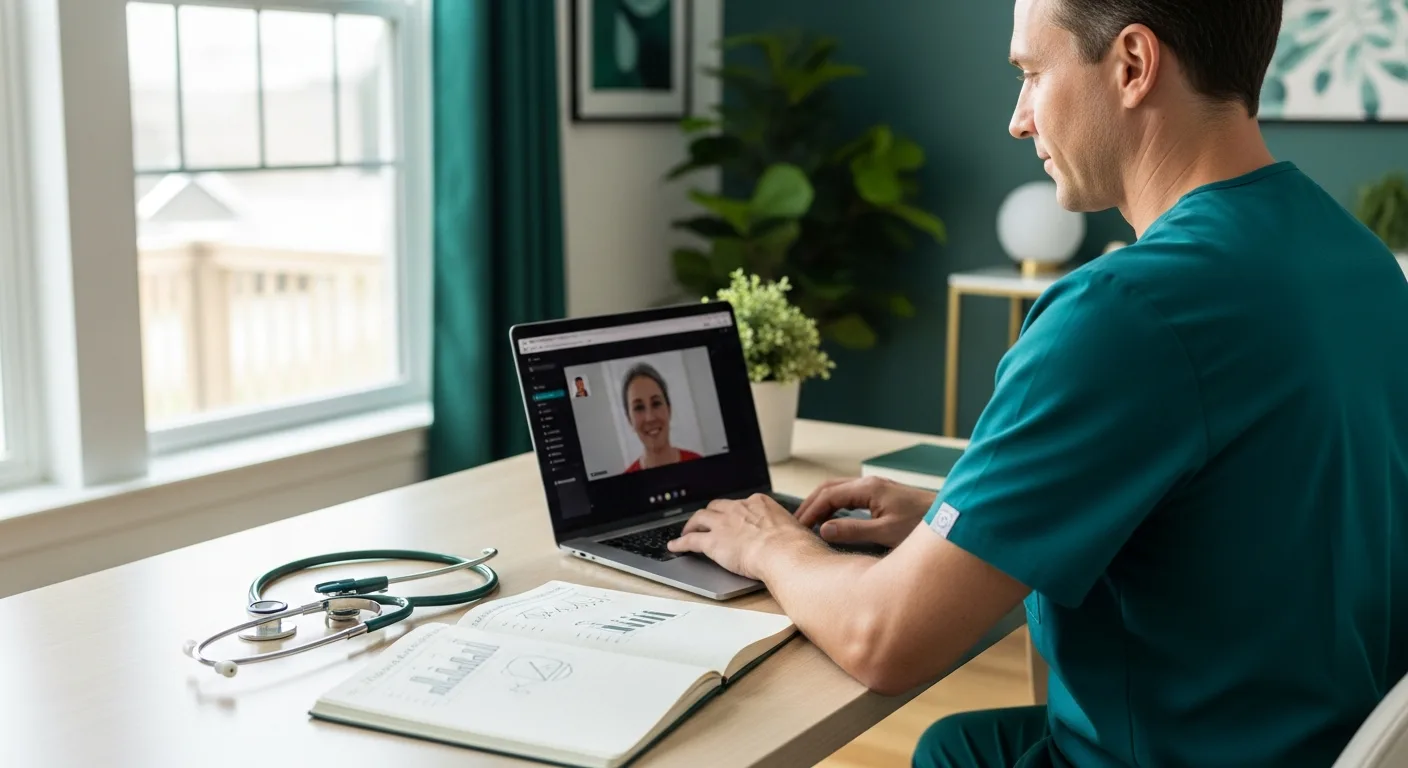
There is no single number. The four telemedicine income models, how to price your online consultation with real data, and how to actually get paid.
How much telemedicine doctors earn depends far less on the platform they choose than on three variables they control: the income model they work under, the price they set per consultation, and how many of their available hours actually convert into paid visits. Two physicians in the same specialty, in the same country and with the same calendar, can bill very different amounts depending on how those three pieces are configured. This guide explains the four income models that exist in telemedicine today, how to price your consultation without working at a loss, what an online practice really costs, and the point almost no article covers: how to make sure the money actually reaches you when you practise from Latin America or from the diaspora.
How much do telemedicine doctors earn
There is no single figure, and you should be sceptical of any article that hands you one. Telemedicine income varies with the country where you are licensed, your specialty, the currency you are paid in and the contractual model. What does exist is a formula, and it is the same everywhere:
Monthly income = net fee per consultation × consultations per hour × connected hours per month × occupancy rate.
Your net fee is what remains after the platform commission, payment processing fees and currency conversion. Your occupancy rate is the share of published hours that ends in a paid consultation, and it is both the most ignored variable and the one that destroys the most income. A calendar running at 40 % occupancy yields half of the same calendar at 80 %, at an identical fee and with the same effort spent attracting patients.
The useful question, then, is not how much you can earn. It is which income model and which fee make those four variables work in your favour.
The four telemedicine income models
1. Direct fee-for-service
You set the fee, the patient pays you, and the platform provides infrastructure only: scheduling, video consultation, clinical records. This model carries the highest margin and the highest demands, because patient acquisition rests entirely on you. It is the best starting point if you already have a patient base or an established professional presence.
2. Commission on each consultation
The platform charges the patient, keeps a percentage and settles the rest with you. In exchange it supplies demand: patients who arrive without you doing any marketing. This is the most widespread model. Before accepting it, get three things in writing: the exact percentage, whether it is calculated before or after tax, and whether extra fees apply on withdrawal or currency conversion.
3. Retainer or subscription
The patient pays a monthly fee for continuous access: messaging, follow-up and a set number of consultations. It generates recurring, predictable revenue and fits chronic care especially well, including hypertension, diabetes, mental health and nutritional follow-up. The risk is misjudging usage and ending up delivering far more care than planned for the same fee.
4. Contracted shift or remote on-call
You are paid per connected hour whether patients book or not. This removes uncertainty and works well to supplement income, but it caps your margin: you will never earn more than the agreed hourly rate, however efficient you become.
Many doctors end up combining two models: a contracted shift that covers fixed costs, plus direct consultations that provide the margin. If you are still deciding where to work, the criteria for evaluating a platform before you sign up come before this conversation.
How to price your online consultation
A common mistake is setting the online fee below the in-person one because remote care seems cheaper to deliver. The savings on premises and travel are real, but clinical time and liability do not change. Price it like this:
- Measure real time per consultation, not the calendar slot. A 20-minute visit typically consumes 30 once you count the pre-visit review, the consultation itself and the documentation afterwards.
- Establish your cost per working hour: licensing fees, malpractice insurance, connectivity and power backup, continuing education, and all the administrative time you never bill.
- Apply your expected occupancy rate. If you expect to fill 60 % of your slots, your fee must sustain your income at that 60 %, not at 100 %.
- Account for no-shows. Set a clear no-show policy and communicate it at the moment of booking; without one, every missed appointment is an hour given away.
- Review your fee every six months. Costs move quickly across the region, particularly if you earn in a different currency from the one you spend in.
The real opportunity in Latin America
The demand is not a sales promise: it is a documented structural gap. The Pan American Health Organization projects a shortfall of roughly 600,000 health professionals in Latin America and the Caribbean by 2030, measured against a threshold of 44.5 medical, nursing and midwifery professionals per 10,000 inhabitants. Around two thirds of countries in the region currently fall short of that target. Globally, the World Health Organization estimates a shortfall of approximately 10 million health workers by the same date.
Part of that gap is being closed digitally. Market estimates put Latin American telemedicine at around USD 6.4 billion in 2024, with projected double-digit annual growth into the next decade, and PAHO itself launched a regional telehealth platform in 2023 to bring services to remote populations.
For Venezuelan physicians there is an even more pointed figure. According to the Association of Venezuelan Doctors in Spain, as reported in the Venezuelan press, roughly 5,000 Venezuelan doctors live in Spain and only half of them practise; more than a thousand cannot work because of obstacles in getting their degrees recognised. Telemedicine does not solve credential recognition, but it does let you keep practising under the licence you already hold while the paperwork advances.
Getting paid from Latin America
This is where telemedicine projects most often fail: not for lack of patients, but because the money never arrives. Before accepting any agreement, settle these six questions:
- Which currency is the fee set in, and which one are you settled in? If you earn in one currency and spend in another, the exchange rate is part of your fee, not an administrative footnote.
- Who absorbs the payment gateway fee and the exchange spread? A 3 % processing fee plus a 5 % spread turns an acceptable rate into a bad one.
- How often are payouts settled? Weekly, biweekly or monthly changes your cash flow entirely.
- Is there a minimum withdrawal? A high minimum can lock up your money for months exactly when you are starting out.
- Which payout methods are supported? International transfer, payment gateways, digital wallets and local mobile payment are not interchangeable from one country to the next.
- What tax documentation does the platform issue? You will need it to file in your country of residence, and it is not optional.
One practical rule saves a lot of grief: test the full payout circuit with a small withdrawal before you build your calendar on that platform.
The costs almost nobody calculates
- Licensing and professional fees in the country where you practise.
- Malpractice insurance that explicitly covers remote care. Many traditional policies do not.
- Stable connectivity and backup. Across much of the region, a secondary data plan and a battery or UPS are not a luxury but a condition of continuity of care.
- Non-billable time: documentation, reports, coordination and follow-up messaging.
- Tax obligations on digital income, which have changed in several countries in recent years.
Five mistakes that cut your income
- Publishing too little availability, badly distributed. Evening and weekend slots concentrate demand from working patients.
- Having no no-show policy. Every free missed appointment is an hour given away.
- Accepting commissions you do not know precisely. If you cannot calculate your net fee, you cannot set a price.
- Neglecting your profile. A profile with no photo, no clear specialty and no listed languages converts far worse, even at a competitive price.
- Ignoring continuity. Returning patients cost nothing to acquire, and getting your first patients is only half the job. Protecting your calendar also protects you from the burnout that pushes doctors out of practice.
Getting started with Aliviaq
Registering as a doctor on Aliviaq is free: you build your profile, verify your credentials, publish your availability and start receiving patients from Venezuela. If this is your first remote consultation, the practical guide to getting started covers the operational side.
Telemedicine is not passive income and it is not a lottery. It is a practice with a different cost structure and a far wider geographic reach. Choose the right model, price with data, and verify how you will be paid before you begin, and the numbers work. Register free on Aliviaq and start seeing patients today.
Frequently Asked Questions
How much does a doctor earn per telemedicine consultation? It depends on the country, the specialty and the contractual model, so no global figure works as a benchmark. What matters is your net fee: what remains after the platform commission, payment processing and currency conversion. That is the only number that determines your real income.
Is telemedicine profitable for a general practitioner? Yes, provided calendar occupancy is high. General practice starts with an advantage: higher consultation volume, many common complaints that can be resolved remotely, and more potential for returning patients than most specialties.
Can I practise telemedicine from abroad for patients in my home country? That depends on the regulations of the country where the patient is located and on where you hold a valid licence. Check licensing and prescribing requirements before you see anyone, and confirm that your malpractice insurance expressly covers remote care.
How much does a telemedicine platform charge per consultation? It varies widely between platforms, and some charge no commission at all. Ask for the exact percentage in writing, together with withdrawal and currency conversion fees, before you register. A refusal to put it in writing is itself a warning sign.
Do I need to invoice and declare telemedicine income? Yes. It is professional income like any other, and several countries have specific obligations for income earned digitally. Check what tax documentation the platform issues before you start seeing patients.
This content is for informational purposes only and does not replace consultation with a healthcare professional. For any symptoms or concerns, always consult your doctor.
Medicina General with extensive experience in telemedicine. Regular contributor to the AliviaQ health blog, committed to rigorous and accessible medical communication.